A sink hair catcher is a small purchase, but choosing one is easier when you start with the drain rather than the finish. The important questions are practical: where will it sit, what will it collect, how will you remove it, and do you also need the basin to hold water? Answer those questions first and the choice between a flexible catcher, a stainless steel model and a stopper set becomes much clearer.
Our bathroom SinkShroom models collect loose hair inside a compatible drain. Kitchen SinkShroom uses a wider basket to collect food scraps. Both make debris easier to remove at the opening, but their shapes and fitting requirements serve different rooms. This guide walks through that distinction, explains what to measure and helps you build a cleaning routine around the model you choose.
Start with the room and the task
In a bathroom sink, the problem is usually small strands from everyday grooming. Hair can reach the basin during brushing, shaving or washing. A catcher gives those strands a place to gather before they travel farther into the drain. The useful feature is not just catching the hair: it is being able to lift the whole piece out and wipe it clean without reaching deep into the opening.
In a kitchen sink, food particles are the main concern. A basket gives scraps a place to collect while dishwater drains around them. Kitchen SinkShroom has a raised center that acts as a grip, so you can lift the basket when it needs emptying. It is wider than a bathroom hair catcher and should be chosen for the kitchen drain it is intended to serve.
Think about how you actually use the sink. A bathroom basin used for shaving may need frequent checks even if it never sees long hair. A kitchen sink used for preparing vegetables may collect peel fragments before the dishes arrive. The amount and type of debris help you decide how often to empty the catcher; they do not make one model suitable for every drain.
Also separate prevention from repair. A catcher deals with new debris entering at the opening. If your sink already drains slowly with nothing covering the opening, adding a catcher will not remove the existing blockage. Resolve that problem separately, then use the catcher as part of ongoing care. This avoids expecting a small removable filter to do the work of a drain repair.
Measure the opening, not the decorative rim
Bathroom drains often have a metal trim ring that is wider than the hole underneath. The visible top of a stopper can be wider again. Measuring either of those surfaces can lead you to choose the wrong catcher. You need the inside opening into which the catcher will sit, together with enough room below it for the body of the product.
First identify the fixture and read its removal instructions if a stopper covers the opening. Some stoppers lift out, while others connect to a mechanism below the sink. Do not pull hard on a part that resists or assume that a decorative cap is intended to unscrew. If you cannot identify the arrangement, ask the fixture manufacturer or a qualified person before taking it apart.
Once the opening is accessible, measure straight across its interior with a ruler. Keep the ruler level and note the result rather than estimating from a photograph. Check more than one direction if the opening looks irregular. Record the measurement in the units used on the product page, and avoid rounding a borderline measurement into a size simply because that option is convenient.
Diameter is only part of the fit. A fixed crossbar, central rod or other piece below the opening may prevent a catcher from sitting at the intended depth. Look into the opening with good light and compare that space with the product’s shape. A catcher should not need to be crushed, bent or forced past an obstruction to sit in place.
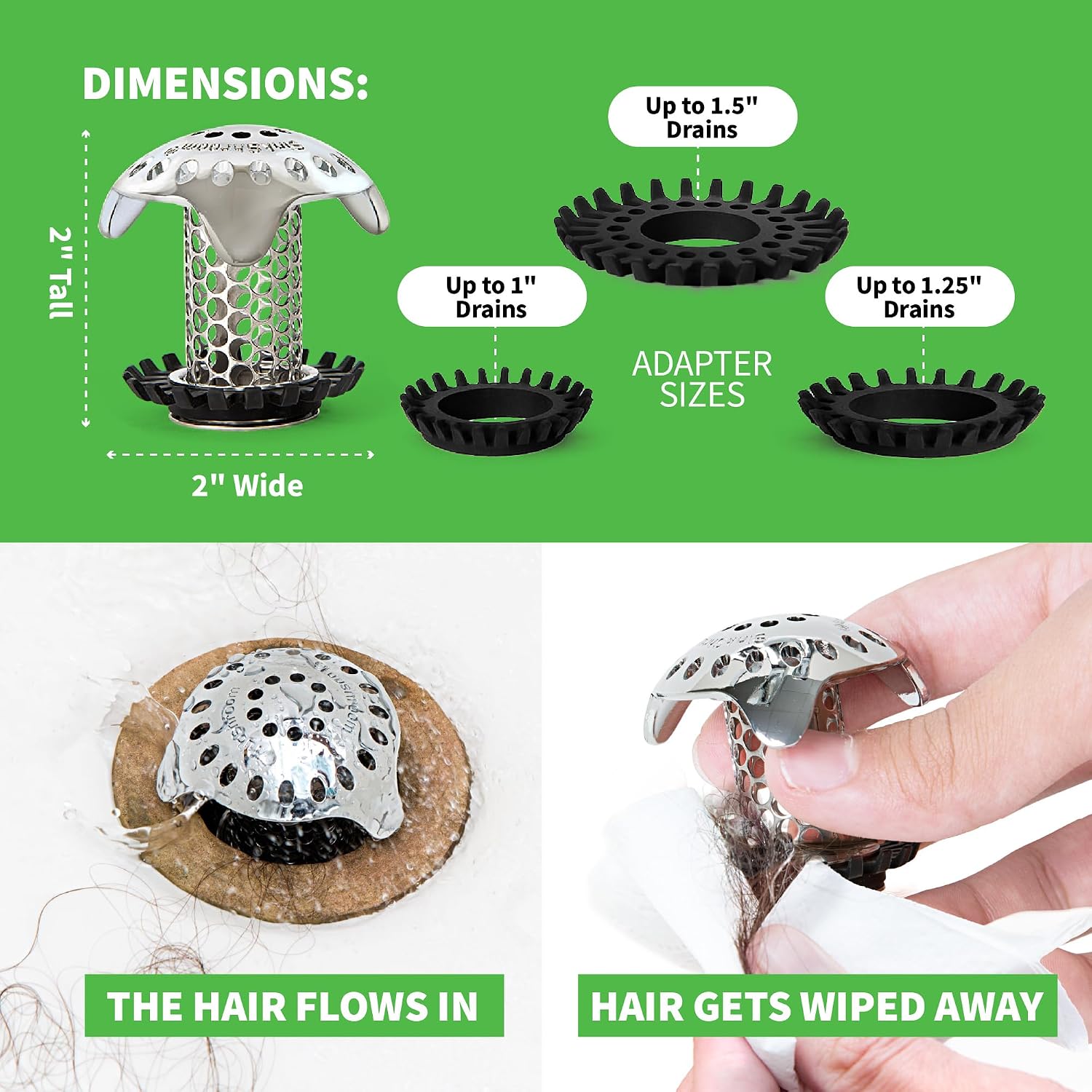
SinkShroom Ultra includes adapters for approximately 1, 1¼ and 1½ inch bathroom drain openings. Those options help you choose an appropriate ring; they do not eliminate the need to check clearance. The flexible Original and Chrome Edition models have their own fitting descriptions. Use the measurements on the exact product page rather than treating every bathroom model as interchangeable.
A useful note to keep
Write down the room, inside opening width, stopper type and any visible obstruction. A quick photograph of the open drain can help you compare the shape when you return to the product page.
Decide how you want to hold water
A hair catcher and a stopper solve different problems. The catcher is perforated so that water can drain while hair collects around it. A stopper closes an opening so the basin can fill. A bathroom hair catcher on its own should not be expected to provide a watertight seal, even if its cap looks similar to a familiar drain plug.
If you regularly fill the basin, look at a set that includes a separate stopper. The selected Ultra + Stopper set pairs the stainless steel catcher with a StopShroom plug. Use each piece for its intended job and follow the instructions for changing the arrangement. Keep the plug in a predictable place so it is available when you need it.
An existing pop-up stopper deserves attention before purchase. Its mechanism may occupy the same space the bathroom catcher needs. Removing the visible cap may not remove a rod or crossbar underneath. Check the fixture’s instructions and the available space. If the arrangement cannot accept an inside-the-drain catcher, do not try to solve the mismatch by forcing the product into place.
The same distinction matters in the kitchen. An open basket lets water pass through. A selected kitchen set with a separate stopper adds a water-holding option. Check the package contents rather than judging by a product-family name: a strainer-only package and a strainer-plus-stopper package can look very similar in a small catalog photograph.
Compare the parts you will handle
Material changes the feel of everyday cleaning. SinkShroom Original has a flexible thermoplastic rubber body. The selected green and blue versions offer the same general inside-the-drain approach in different colors. A visible color can make the catcher easier to find in a busy basin, but color should come after compatibility in your decision.
Chrome Edition combines a chrome-look top with a flexible catching body. It may suit a bathroom where you prefer the visible cap to coordinate with metal fixtures. Read the material description carefully: a metallic-looking finish does not mean every part of the catcher is solid metal. The selected model’s dimensions and construction are more useful than a broad finish label.
Ultra uses a stainless steel body with removable adapters. If you choose this version, keep the extra adapters with the product information until you have confirmed the fit. The included sizes are part of the reason to choose the model, particularly when your measured opening needs an alternative to a single standard size. Match the ring before testing the water flow.
Kitchen SinkShroom uses a stainless steel basket and a raised center. The selected matte black model adds a darker finish and comes with a separate stopper. Consider how the finish fits your kitchen, but also picture lifting and emptying the basket after a meal. Easy access to the center grip and a correct seat in the drain matter every time you use it.
Package contents are worth a final check. Count catchers, adapters and stoppers in the text of the selected page. Do not assume that an accessory visible in a comparison photograph is included in every option. Our model comparison lists these differences together so you can compare the practical details without switching repeatedly between pages.
Three useful starting points
| Model | Where it belongs | What to check |
|---|---|---|
| SinkShroom Ultra | Bathroom hair collection | 1, 1¼ and 1½ inch adapters; drain clearance |
| Original Green | Bathroom hair collection | 1¼ inch opening; flexible TPR body |
| Kitchen SinkShroom | Kitchen food scraps | Basket seating and the sink fitting |
Check the fit with a clean, empty sink
Start with a clean basin and an accessible drain. Remove loose debris at the opening and make sure the sink drains normally before installing the catcher. Keep any removed stopper parts together. If your model includes adapters, choose the one that matches your measured opening and attach it as directed by the supplied instructions.
Set the catcher into position gently. The accessible top is there so you can lift the product later. Check that it sits stably and that its body has room below the opening. If it rocks, sits unexpectedly high or requires force, take it out and recheck the measurement, adapter and clearance. Installation should not depend on bending a metal component.
Run the faucet briefly while watching the drain. Water should reach the catcher’s openings and leave the basin. Look for standing water that remains around a clean catcher or a position that shifts easily during normal use. This first check gives you a useful baseline for later: you know what the flow looked like before hair or food began to collect.
For a kitchen strainer, inspect how the basket sits on the drain seat. A special sink cover or disposal splash guard can change the available space. Keep the disposal switched off while handling a strainer and follow the disposal manufacturer’s instructions. Never put your fingers into the appliance to make room for a basket.
Keep the package until you have checked the fit and understood the seller’s return conditions. A clear photograph and your measurement notes are useful if you need to ask a fitting question. For installation steps specific to the selected range, see our installation and cleaning page.
Build the clean-up into a task you already do
A catcher is easiest to maintain when cleaning it belongs to an existing routine. Check the bathroom model when you wipe the basin or after a grooming task that sends loose strands toward the opening. Empty the kitchen basket after food preparation and washing up. Linking the check to something familiar is more useful than choosing a schedule you are unlikely to remember.
For a bathroom catcher, lift the accessible cap and wipe the collected hair from the body into the trash. Rinse the piece and inspect the small openings for residue before putting it back. Sending the removed hair straight down the empty drain would defeat the purpose of catching it, so keep the disposal step separate from the rinse.
For a kitchen basket, lift with the center grip and empty the contents into the trash or an appropriate food-waste container. Rinse the basket on both sides so trapped fragments do not remain beneath it. Food scraps can sit out of sight around the bottom or edge, so a quick look underneath is a useful part of the process.
Use the care instructions supplied with the exact model. A soft cloth is a sensible starting point for routine surface cleaning, especially on a coated finish. Avoid assuming that a cleaning method approved for one sink accessory is approved for another. A product described as reusable still needs regular cleaning and inspection to keep its openings clear.
There is no single cleaning interval that fits every household. One basin may see short shaving hairs each morning; another may collect longer strands only occasionally. Check frequently while learning how much your sink gathers, then adjust the routine. Water beginning to slow is a reason to inspect the catcher promptly rather than waiting for a chosen day.
If drainage slows, separate the catcher from the drain
Start by lifting and cleaning the catcher. Look for hair wrapped around the body, food filling the basket or residue covering small holes. Rinse the piece, then check the empty drain briefly. This simple comparison helps you distinguish a full catcher from a drainage issue that remains after the catcher is removed.
If the empty sink drains normally, inspect the product’s placement before reinstalling it. An adapter may be the wrong size, a body may be pressed against an obstruction, or a separate stopper may still be in the water-holding position. Return to the original fitting instructions and the measurements you recorded. Do not enlarge holes or modify the product to compensate for a mismatch.
If the sink remains slow with the catcher out, the cause may be elsewhere in the drain. The catcher has not become a tool for clearing that blockage. Follow the fixture manufacturer’s guidance or get appropriate plumbing help. If a drain treatment has already been used, tell anyone working on the drain and follow the treatment’s safety directions.
When the issue is resolved, repeat the clean-water check before returning to normal use. That gives you a fresh baseline. Continued slow flow in a clean, correctly fitted setup is a reason to revisit compatibility rather than repeatedly pushing the catcher farther down. A useful drain accessory should remain easy to remove for the next cleaning.

Make the routine clear in a shared space
In a shared bathroom, everyone should know that the catcher is removable. A family member may otherwise treat it like a fixed part of the drain or overlook the hair gathering beneath the cap. Explain the simple sequence: lift, wipe into the trash, rinse and replace. Keep any separate stopper in the same nearby place after each use.
Use the same approach in a kitchen with several people washing dishes. The basket should be emptied, not left full because water is still passing through it. A quick check at the end of washing up prevents the next person from starting with yesterday’s scraps. The raised center gives a consistent place to grip, making the routine easy to explain.
If you maintain several sinks, label spare adapters or keep them with their original packaging. Similar-looking pieces can belong to different models or sizes. Record which catcher fits each drain, particularly in a home with a mix of older and newer fixtures. This makes replacing a misplaced piece or ordering another catcher much more straightforward.
Keep the expectations realistic. A catcher helps collect debris at the opening, and regular cleaning keeps that collection accessible. It does not remove the need to care for the sink, check an unusual smell or deal with an existing blockage. Its value is the small, repeatable task it makes easier.
Choose the model around your drain
For a compatible bathroom drain where you want stainless steel and several adapter sizes, start with SinkShroom Ultra. Choose the Ultra + Stopper set when filling the basin is also part of your routine. Check the separate pieces and the fitting instructions before ordering.
For a flexible bathroom catcher, compare Chrome Edition with the green Original and blue Original. Let the opening size and clearance decide which models are suitable, then choose the visible finish you prefer.
For food scraps in the kitchen, use the Kitchen SinkShroom range. Decide whether you need only the basket or a set with a separate stopper, and compare the stainless steel and matte black options. Confirm that your drain seat and any disposal components allow the intended fit.
Before buying, make one final check of the selected model, included parts, final price and delivery information in the purchase tab. Once it arrives, test the fit in a clean sink and keep the care instructions. With the right model in place, the daily task stays simple: collect the bits at the opening, lift them out and leave the drain ready for the next use.